
Ode to Michael
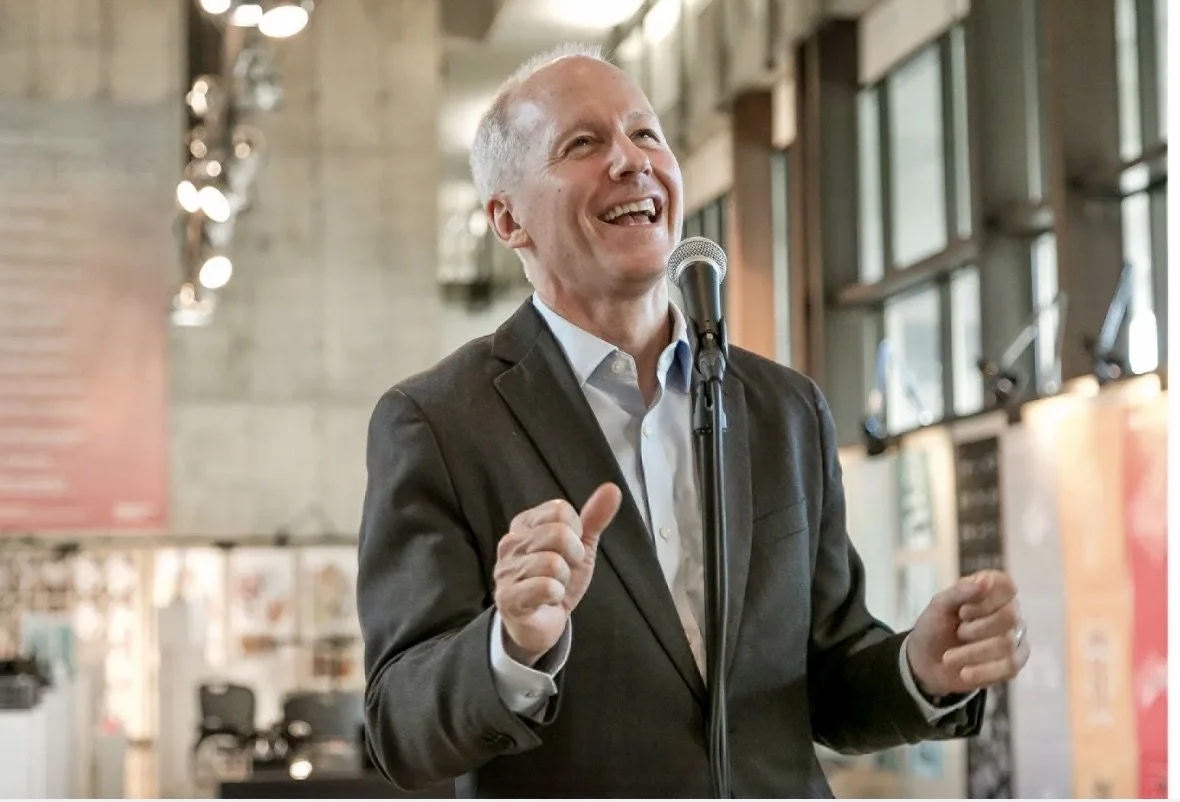
Photo from Knowlton School of Architecture at Ohio State University
I am blessed to be a part of the Cadwell family. Six brothers, all different, all full of love, humor, and dedication to one another. I grew up the youngest, by far, of four children, and though I loved and looked up to my siblings, I never experienced being part of a tribe. When Ashley and I married, 50 years ago this month, I joined the Cadwell clan, and have been a part of a bustling, busy, spectacular family ever since.
Ashley is the oldest…then came Steven, Michael, Jared, Alden, and Jason, in that order. Steve died of glioblastoma on August 29, 2019. Michael died of pancreatic cancer on August 9, 2026.
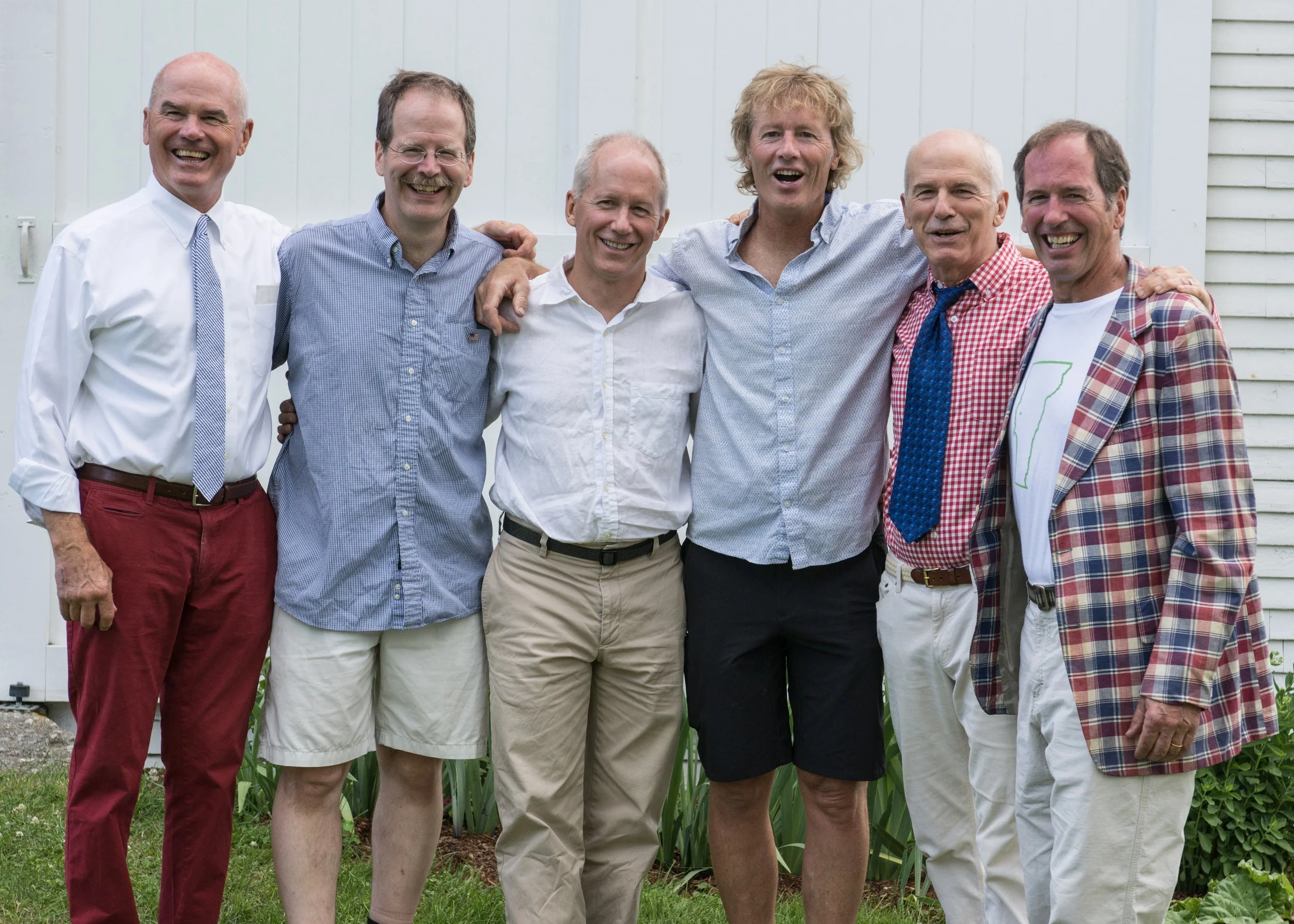
Ashley, Jason, Michael, Alden, Steven, and Jared Cadwell in front of the Cadwell family barn, Pittsford, Vermont, 2017
A few weeks ago, four brothers and three sisters-in-law joined Michael’s wife, Jane, and son, Gus, and Michael in Columbus, Ohio. Michael wanted us to come. We had the chance to be fully present with Michael and he with us. We had the chance to say goodbye.
Michael was an architect and a builder. He was a musician. He was a writer. He was a triathlete. He was a dog lover. He was a wit. He was a big hearted, whimsical, gifted man who loved his family and friends dearly.
There is a beautiful tribute to Michael by his former student and colleague, Todd Gannon, in the publication, Architectural Record. I quote from this tribute below.
Michael Burditt Cadwell, longtime faculty member and former director of the Knowlton School of Architecture at The Ohio State University, died at his home in Columbus, Ohio, on Sunday of pancreatic cancer. He was 73 years old.
“Michael was an able administrator who strengthened the Knowlton School’s relationships with the College of Engineering, the university, and the professional community in Columbus and nationwide,” said Robert Livesey, who recruited Cadwell to the school in 1989. “But his greatest legacy will be his infectious dedication to the power of making buildings well, which he passed on to several generations of students during his 31 years at the school.” Cadwell’s contributions to architectural education were recognized with several accolades from the university and, in 2015, with elevation to fellowship in the American Institute of Architects.
Best known for his slim but influential books, Strange Details and Small Buildings, Cadwell sought in his building, teaching, and writing to articulate the sensual poetry of built form. He was as adept with hammer and nails as he was with the written word, and across his work extolled the timeless beauty of simple forms thoughtfully assembled.
In the quartet of diminutive buildings he constructed himself in rural New England in the 1980s, Cadwell conjured a distinctive lowercase monumentality that drew equally on the vernacular farm structures of his youth in rural Vermont and the abstracted archetypes favored at the time by James Stirling, whose teaching at the Yale School of Architecture strongly influenced his work.
In Strange Details, published in 2007 in the MIT Press’s Writing Architecture series, Cadwell homed in on the tectonic idiosyncrasies he observed in the work of modern masters, finding uncanny liquidity in Carlo Scarpa’s masonry, transitory impermanence in Frank Lloyd Wright’s wood framing, elegant erasures in Ludwig Mies van der Rohe’s steel connections, and ethereal lightness in Louis Kahn’s concrete. The book was a hit. It was shortlisted in two categories for the RIBA Architects Book Award, remains a staple on university syllabi, and was deemed worthy of “required reading and re-reading in every school of architecture” by the historian Kenneth Frampton.
“Michael’s writing always inspires me to look at architecture differently, more carefully,” observed Eric Höweler, professor of architecture at Harvard’s Graduate School of Design. “His poetic readings of ‘strange details’ remind us that architectural details are much more than how materials come together. . . . In Michael’s reading, they embody ways of looking and knowing the world.”
In 1983 he completed Bridge-Box, the first of his small buildings, on a secluded site in Salisbury, Connecticut. The project consists of a simple timber truss that spans a small creek and is surmounted by a pine-clad box. Within, a plywood seat aligns with a square window framing a pastoral scene beyond. A ladder at the back of the seat pokes through another square opening overhead, through which visitors access two gently reclined banquettes that direct one’s view toward the sky.
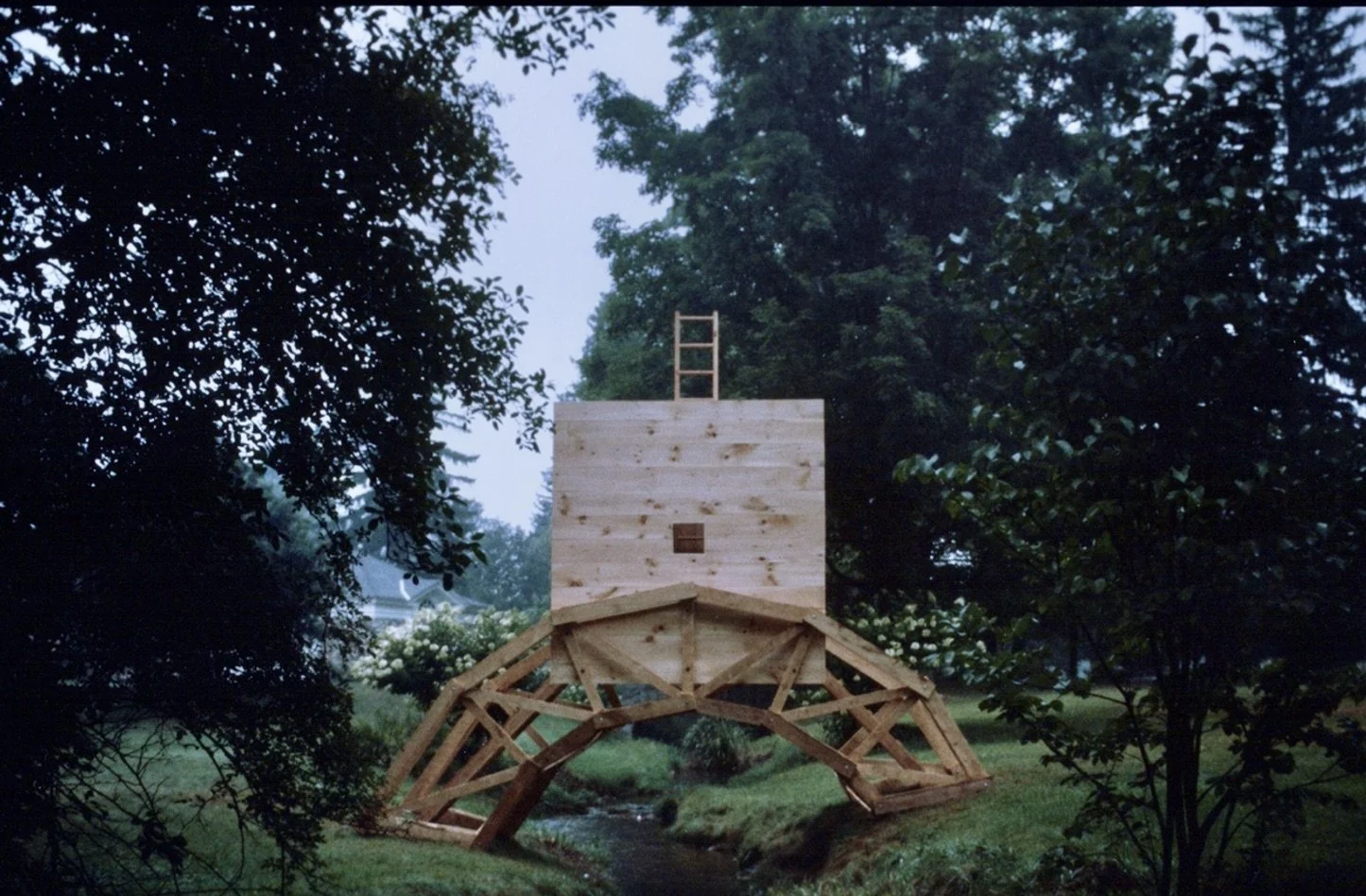
Bridge Box, photo by Jane Murphy
Three more small buildings followed soon after. In each, Cadwell produced carefully choreographed spaces in which occupants could momentarily withdraw from everyday life to reconnect with “the elemental rhythms of nature.” The withdrawal, however, was fleeting. “One’s meditations in seclusion inevitably affect one’s engagement with society at large,” he wrote. “While there is a retreat, there is also a return.” To underscore the transitory nature of his efforts, Cadwell designed a limited lifespan into his structures, building them with unfinished green lumber to hasten their inevitable slouch back into the landscape.
Our family is forever grateful to Todd Gannon for this beautifully written piece about Michael and his work in the world.
In several emails to family about his condition during the last six months, Michael concluded with these words.
So, let’s not let what we cannot control interfere with what brings joy. I will keep you posted on my progress so we can concentrate on what we love: children (all agesI), art, animals (domestic and wild!), music, architecture, gardens (orchids to onions!), literature, sports (the Olympics!), and travel.
Love to all,
Mike
Michael wrote his own obituary.
Obituary
Michael Burditt Cadwell, son of John and Mary Cadwell, died peacefully on August 9, 2026 after a long illness. Michael enjoyed an idyllic childhood on the family farm in Pittsford. He attended Otter Valley Union High School ’70, Williams College ’74, and the Yale School of Architecture ’81. He then worked for the firms of Turner Brooks, Cesar Pelli, and Wiemann and Lamphere.
There followed scholarly pursuits in architecture at The Ohio State University, where he spent 31 years, eventually becoming Director of the Knowlton School of Architecture, Landscape Architecture, and Planning before retiring in 2020.
Michael published widely, most notably with his books Small Buildings and Strange Details. He was awarded Fellow of the American Institute of Architecture, and fellowships to the American Academy in Rome, the MacDowell Arts Colony, and the Woodstock Art Colony.
Throughout he was lovingly supported by his wife Jane Murphy, his son Gus Murphy, his dog Manny and his brothers Ashley, Steven, Jared, Alden, and Jason and their families.
Michael was blessed with a full and rich life, manifested in a unique combination of low comedy and high endeavor. He enjoyed guitar playing, skiing, soccer, and triathlon. Most of all, he enjoyed time with Jane and Gus and his extended family at gatherings in Maine and Vermont.
There was love and laughter.
In lieu of flowers, donations can be made to the Pittssford Village Farm at
https://www.pittssfordvillagefarm.org/donate. Or The Michael B. Cadwell Endowed Scholarship
Fund fund # 483652. https://giveto.osu.edu/makeagift/details/483652
Michael will be remembered for his way of building and writing about building, for his kindness and his humor, for his measured and melodious voice, for the sparkle in his eyes and his contagious and joyous laughter. He will be remembered for his courage and steadiness in the face of illness and death. We will miss him always.
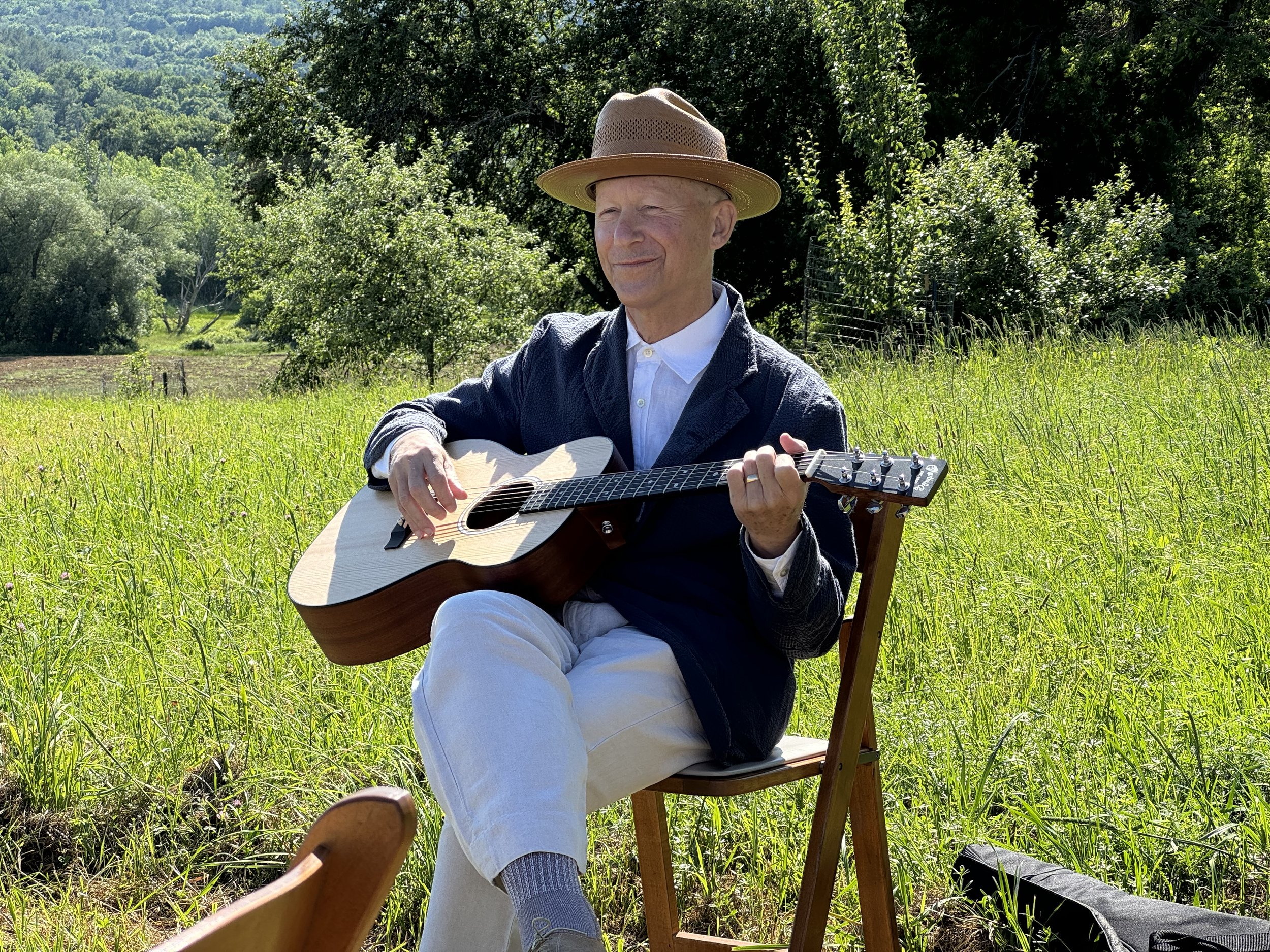
Michael playing at his niece, Celia Cadwell’s wedding, 2024