BLOG ARCHIVES

Patterns and Elements of a Good Project

On everyone’s favorite Friday, April 13th, 2018, Louise and I spent a lucky day with Barbie Perez and her faculty at La Scuola, in Miami, Florida. In 2017, La Scuola moved into a beautiful vacant school in the Dade County area of Miami. It’s a dream come true for them with its two adjoining one floor buildings, with all rooms opening out to the surrounding four acres of woods and fields. They are having a blast settling in, making the place their own, complete with chickens, a lizard park, favorite trees and wild peacocks.
For a number of years, La Scuola faculty has focused their curriculum around place-based, inquiry projects. We have published previous blog posts featuring their work and our work with them. During this day together, we decided to reflect together on their experiences with projects to discern: What are the patterns and elements of a robust, successful project?
We began with an open discussion of their ideas. Then we considered several resources, one from Ron Berger and another from Gary Stager. We listened to Leila Gandini interview Loris Malaguzzi about the elements that make a good project. From these sources we discovered more ideas. Next we looked at images from The University of Vermont Campus Children's School focused on toddlers and mark making. Then, Ashley shared an iBook from The St. Michael School of Clayton What Is the Relationship between Animals and Humans? (a year long project with 3-year-olds through grade 6). Finally, we viewed three La Scuola projects from this year, one on Bees and the other on Trees of their Campus.

What we wrote that day is a work in progress rather than a definitive statement about project work. It is the basis for a shared understanding created together in April, 2018. Surely this understanding will change and grow over time. Just the other day, after we made this blog post public, Barbara Burrington of the Campus Children's School wrote, "It's about the story." And indeed it is.
From our investigation together, we summarized as follows:
A successful project...
Begins with intentional planning...to develop a clear vision...and a map (that will be edited over the length of the project as things evolve)...the map lists the enduring understandings, essential questions, learning experiences and other sources for research and inspiration, skills developed, content explored, ways to make the learning visible (assessment).
Seeks to spark curiosity
Makes strong connections with school community and surrounding community
Gives opportunity to build relationships among self, peers and community members of all ages
Makes real life connections
Is relevant and appropriate for the age group and skill capacities
Incorporates an array of hands on learning experiences. Experiences to explore...analyze...observe. Experiences that invite theories...that involve problems to be solved
Engages students as responsible citizens
Involves life long learning and develops understanding of big ideas of Sustainability Education such as: Interdependence, Healthy Systems, Change over Time, Ecological Principles, Sense of Place, Multiple Perspectives, Local & Global Citizenship, Inventing & Affecting the Future

A successful project also...
Continues over time...plenty of time...through cycles of reflections and revised projections
Composes and scaffolds continuity...while it is open to unexpected collaborations
Has some things that go away...and some new things appear...while some may reappear
In a good project teachers...
Trust the students...and look for ways that they can and do inspire each other
Listen to the students (what goes on in the hallways is as important as in the classroom)
Elicit and listen to students’ theories
Build on interests and individual strengths
Extract what students know...and what their questions are
Value the process(es)
Build a culture of excellence, kindness and respect

Tools and techniques within the project
An array of hands on learning experiences
Rich materials
Include parents as resources and as hunter/gatherers
Close observations of ALL the students’ languages...intra-disciplinary...cross curricular
Cycles of verbal investigations (stating observations and theories) and graphic investigations (depicting observations and theories)
Carefully constructed, beautiful work for a public audience
Collaborative critiques, many drafts, HARD WORK...perseverance
Connections with authentic use of skills...and understanding content
Portfolios of work (artifacts)...an assessment of academic success and long lasting learning
As we publish this post, it is with a BIG THANK YOU to the faculty of La Scuola for their good thinking and open minded sharing. They are a wonderful group of dedicated educators. They are doing GREAT work.
Having said that, here's hoping that their intentions become reality: to publish at least one of the projects they are completing this school year.
And, as Louise and I were leaving Barbie that Friday afternoon, we began musing about hosting at two day gathering at La Scuola, February 15 & 16. 2019. The focus would be GREAT projects. If you'd be interested drop me a note.

Transparency and Glass in School Design

Glass…Transparent…Connected…Relationships…Learning
In our previous blog Louise relates the story of our wonderful encounter with Jackie Alexander and Giovanni Piazza in their exemplary schools in Bangkok. Many architectural elements in Jackie’s school design stand out: natural wood floors and some natural wood ceilings; lovely understated lighting; neutral colors (mostly shades of white); open floor plans; clean, clear lines,; simple and sturdy furniture; and most spectacularly and transformative: glass...beautiful large exterior windows and expansive floor to ceiling interior glass walls and doors.
The architectural element of glass supports the pedagogy of the schools.
Obviously, glass is transparent. It visually connects different spaces, inside and outside. It allows the children and teachers to see each other, to connect with each other all the time. That connectedness reinforces the pedagogy of relationships: school is a network of relationships between students, teachers, materials, the outdoors, and the world beyond. Learning happens because of the dynamic of those relationships: the stronger the relationships, the stronger and longer lasting the learning. Standing or sitting in the rooms and hallways and playgrounds of Jackie’s schools, you feel connected and imagine learning in dynamic ways in these spaces.
Here are three panorama photos of three spaces. The feeling of “connectedness” is palpable.

In the panoramic photo below, a hallway, that is often is a dark tunnel leading from one point to another in schools, has been transformed by glass. The glass clearly defines the spaces yet, at the same time, visually connects them and allows natural light to fill the space. Also, note that the hallway is wide enough to comfortably hold a small table with chairs (on the far right). So, the hallway becomes a place for connections…not just passages…there is enough space for people to meet each other…and, as you walk, to see into other spaces, to observe/connect with what other people are doing. With the addition of glass the hallway becomes a communal space.

Below is one of the oldest buildings that Jackie renovated…an original colonial Thai post and beam structure. Below is a panorama photo of almost the entire ground floor. With only a couple of exceptions, all of the exterior wall is floor to ceiling glass. Standing inside the room, an atelier, feels like you are outside, however, neatly contained by the warm natural wood of the ceiling. To work in this space with children must be pure joy.
Hats off to Jackie. She has accomplished something truly remarkable…her work is a new hallmark for school design.

To see a similar effect of the architectural element of glass used on a smaller scale, here is an example that Louise knows well, the atelier space at The College School in St. Louis, Missouri. This atelier studio is an interior room, without windows to the outdoors. Previously, it was a dark corner of a classroom. The room was transformed by replacing solid walls with interior window compositions and adding a wall made out of glass. Now, the learning experiences within one room come into direct relationship with the other daily experiences of the children. Children's work that was secluded in one area becomes visible to other areas.
Window walls are an architectural vehicle for pedagogy that focuses on integrated, interconnected, and, therefore, meaningful projects.

If you are interested in researching these ideas further, I recommend the following resources that have been a great help to me: The Third Teacher, that grew out of the design consultancy led by architect, Trung Le, The Language of School Design by Nair and Fielding, and Children, Spaces and Relations, by Ceppi and Zini. Even small changes that lead toward more transparency and allow for more natural light can make a big difference in any school. We encourage you to discover, dream and design for change.
Worldwide Reggio Inspiration: Thailand

One of the great pleasures and privileges of our big adventure trip in January was the time that we spent with Jackie Alexander and Giovanni Piazza in Bangkok, Thailand. We met Jackie for the first time in the mid nineties at an international conference to honor Loris Malaguzzi in Reggio Emilia, Italy. We met Giovanni when we lived and worked in Reggio Emilia in 1991-92. Louise was an intern/fellow at La Villetta School where Giovanni was the atelierista. She worked primarily with Giovanni in the atelier and with Amelia Gambetti who was teaching the “grandi,” the five and six years old children.

Jackie is originally from Toronto and has lived in Bangkok for 33 years. Her early career took her to Southeast Asia and she never left. She taught in a school for young children, then became director and set out to shape the school to her own vision. That first school was such a success that she has now opened three others including one elementary school, The City School. The group of schools are called Early Learning Center schools or ELC. Jackie studied the Reggio approach and visited Reggio Emilia in the 90’s and she and Giovanni began to get to know each other through those visits. Giovanni visited Bangkok at Jackie’s invitation to further the understanding of her teachers in many aspects of the work in Reggio Emilia. And eventually, their relationship turned toward more than education and they were married in 2005.

Giovanni is now the atelierista at The City School, the one school of Jackie’s that goes through 5th grade. Giovanni works with a partner atelierista, Marco Paladino, who focuses mostly on technology. Giovanni and Marco are close partners with the teachers in helping to design the course of project work as well as the documentation of student work.
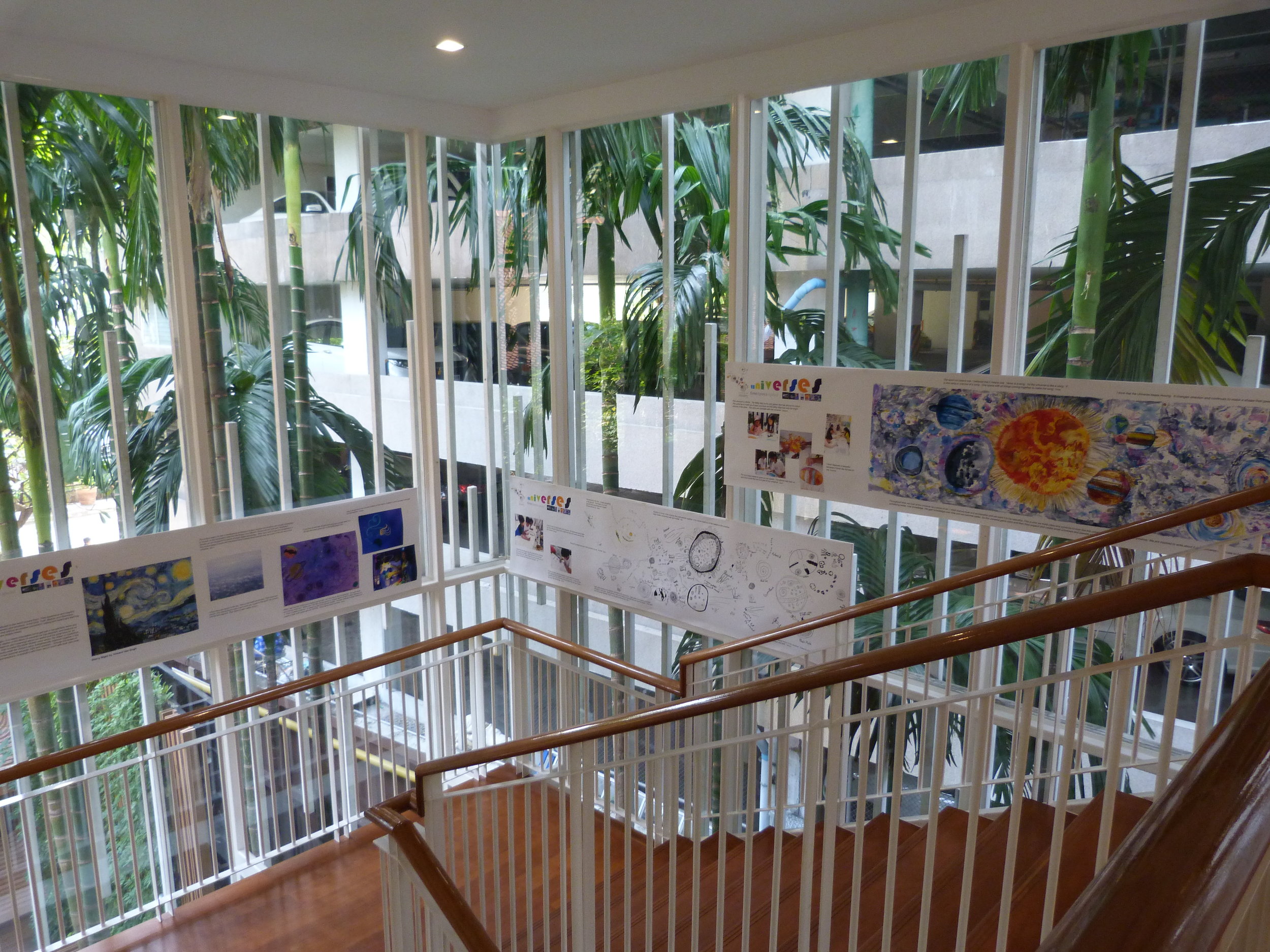

The City School is a campus with many buildings. Jackie has worked with architects to renovate and to transform existing buildings on the site as well as to save and restore some colonial Thai buildings that were moved to the school grounds. The grounds are green and welcoming and the outdoor classrooms and play spaces are beautifully conceived. An aspect of the campus that immediately strikes visitors is the presence of transparency and glass as well as the feeling of authentic, and unique Thai architecture and style. Another impressive aspect is the presence of all the ateliers in all kinds of places. There is an atelier dedicated to light and the exploration of light and shadow in complex and layered ways. There is an outdoor water atelier where children experiment and explore the physics and the beauty of water. There are ateliers for expressive languages and for digital work. There is a music atelier and an atelier dedicated to the natural world. Classrooms are open and are easily accessible to the ateliers and the outdoor classrooms.

The children's work in many media and the documentation of their thinking and their theories, their poetry and writing, their wonderings and questions, their designs and ideas for the future of our world are impressive! We see the work of older children flourish as they master skills and abilities in this kind of rich and diverse environment. We could have spent a week their just reading the walls.

One of the most striking aspects of all is that this is truly and international and diverse school with children, teachers and families from all over the world. Giovanni told me that he was continually fascinated and curious about the collaboration that he witnesses among children from different cultures who have different perspectives and ways of seeing and solving problems. One project of the older children was focused on maps and boundaries and space beyond our world. The students wanted to write messages to the universe and were able to send up a balloon with a camera so that they all could see the earth from an ever expanding perspective as well as deliver their message.

It was heart warming to find friends so far away from home who we have known for so long working in such inspiring schools. We wish we could have spent longer with them and with the children. Jackie and her team have created the kind of schools that you don’t want to leave. I know that many of us are working to create schools that are worthy of our children's intelligence and creativity. May we work for schools like this for all children everywhere.


Back Home Again
Goodness, we have been gone a long time and away from this space of writing blog posts at least twice a month. We've had such an adventure that we wanted to begin our blog posts for the new year with a mini reflection on our journey away.
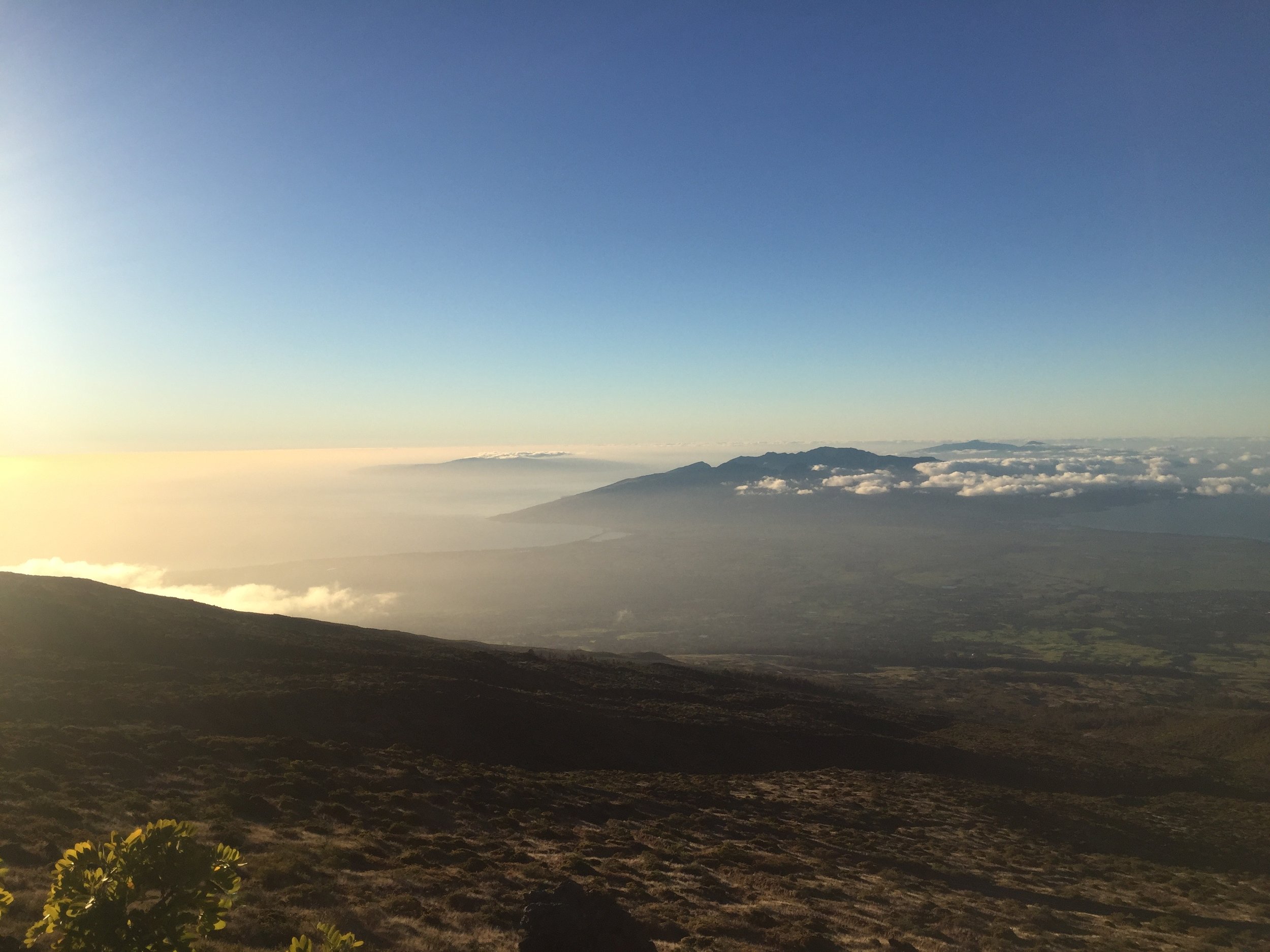
We are back in Vermont, now looking out on a snowy landscape, softly falling flakes, white, black and gray nuthatches and scarlet cardinals at the feeders and winter everywhere. It feels so very good to be home. Two months ago, we found ourselves without any of our children or grandchildren for the holidays, (They were with dear in-laws). So we set out across the world, going west from Boston to San Francisco and then to Maui where we settled into a small cottage for a Christmas with leis instead of greens, and hibiscus instead of poinsettias, the beach instead of skiing and snow, and some dear, long lost friends in the place of family.
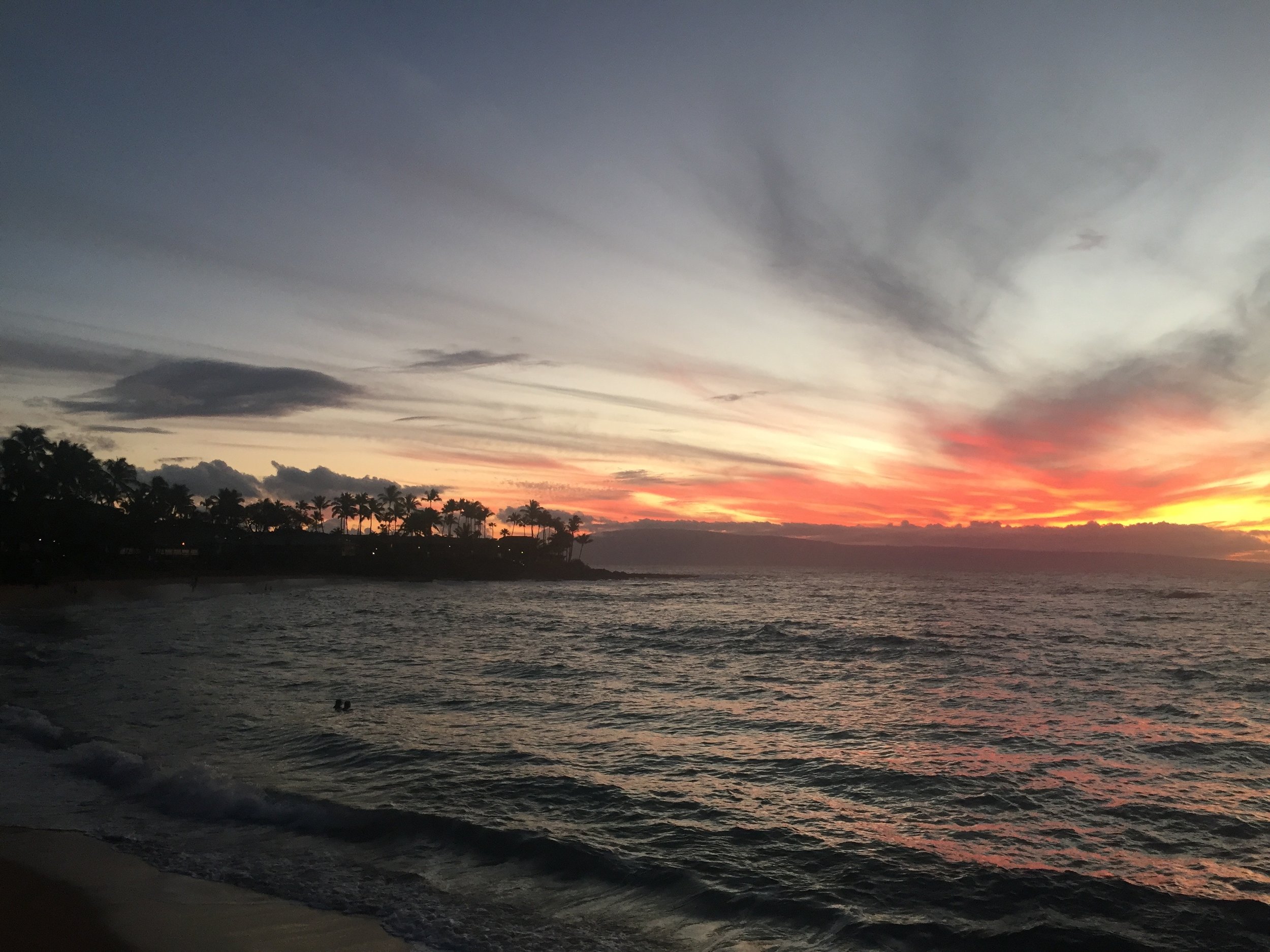
Then, close to the end of the month, we headed to New Zealand. We lost a day and arrived just before New Year. We marveled at the Southern Cross and the starry southern hemisphere sky as we turned the corner into 2018. We reveled in the landscape, the merino sheep, the glaciers and rainforests and beaches with wild surf and smooth stones. We moved around the South Island and learned so much about the land, the geology and the flora and fauna from guided nature trails and guides at lodges. And it was light from 6 a.m. to 9 p.m. So much light and varied, beautiful land and sea. We were amazed most of the time.


In mid January we headed to Thailand where we joined a National Geographic Tour for two weeks.We traveled north to Chang Mai and south to Ko Samui and the rain forest. Our favorite experiences were small group bike rides through the countryside with local guides. We also spent two splendid days with Jackie Alexander and Giovanni Piazza in their ELC schools in Bangkok. We plan to write a blog post dedicated to those days and those schools, coming soon.

Thailand was a world of difference for us. We had never been to Southeast Asia. Bangkok is a big, bustling city with so much to see. Right away we found the Jim Thompson House because I have heard about Jim Thompson most of my life. He and my father were born in the same year and attended Princeton University together. Jim Thompson was an architect, a business man, an agent in the OSS, precursor to the CIA who lived in Thailand most of his adult life. His home, now a museum, is filled with his collection of Asian art. He is known for single handedly revitalizing the silk industry in Thailand. My parents visited him several times in this house and my brother remembers celebrating his birthday at Jim Thompson's while he was stationed in Asia.


We were thrilled to make the connections with both Jim Thompson and Jackie and Giovanni in Bangkok. These personal connections made our pilgrimage worth every effort.
We finished our around the world adventure with five days in Paris. We visited a museum every day and were swept away, once again, by the small streets, the Paris rooftop views, the ambiance, the cafe's, and the ever present charm of this city of love.

So that was our trip! We saw children everywhere, in museums, in schools, in strollers, on bicycles and thought about their lives in these far away places. We felt like children ourselves in many ways, soaking in the new every day, writing in our journals, sketching and painting our impressions and reflections, learning.
We are glad to be home and glad to be back in the swing, posting thoughts and being in touch with all of you. All the very best for the new year and for February, as the light returns.
Louise and Ashley